Do Exergames Improve Mood and Mental Well-Being in Older Adults?

The results indicated that exergames positively impacted mood in older adults, reducing tension, anger, fatigue, confusion, and depressive symptoms, while promoting engagement, immersion, and socialization.”

As people live longer, maintaining mental well-being has become an increasingly important part of healthy aging. While regular physical activity is known to support both physical and psychological health, many older adults face barriers that make traditional exercise programs difficult to sustain. Researchers have therefore been exploring new approaches that combine physical activity with enjoyment, social interaction, and cognitive engagement.

A review published in Volume 18 of Aging titled “What are the effects of exergames on the mood states of older people? A systematic review of experimental studies, impacts on mental health and recommendations,” examined whether exergames—video games that require physical movement to play—can improve mood and mental health in older adults. The study was led by authors from the Laboratory of Sport and Exercise Psychology, Human Movement Sciences Graduate Program, College of Health and Sport Science of the Santa Catarina State University (UDESC) in Florianópolis, Brazil

Turning Exercise Into Play

Exergames combine exercise with interactive digital gaming. Unlike traditional video games that are played while sitting, exergames require players to move their bodies to control gameplay. Popular examples include Nintendo Wii Fit, Wii Sports, Kinect Sports, Dance Central, and virtual reality-based exercise platforms.

These systems have attracted growing interest among researchers because they may help overcome some of the challenges that limit exercise participation among older adults. By incorporating game-like rewards, social interaction, and enjoyable activities, exergames may increase motivation and long-term adherence to physical activity programs.

Previous research has already suggested that exergames can improve physical fitness, balance, mobility, and cognitive function. However, less was known about their effects on mood and emotional well-being in older populations.

Reviewing the Evidence

To better understand these effects, the researchers conducted a systematic review following PRISMA guidelines and registered the study in PROSPERO before completing the analysis. They searched four major scientific databases and identified 651 studies. After applying strict eligibility criteria, nine experimental studies involving 325 participants aged 61 to nearly 79 years were included in the final review.

The studies examined a wide variety of exergaming interventions, including dance-based games, sports simulations, balance-training activities, virtual reality cycling, and cognitive-motor training programs. Intervention lengths ranged from a single session to multi-week programs lasting up to 36 sessions.

Improvements Across Multiple Mood States

The review found that exergames generally produced positive effects on mood. Six of the nine studies reported significant improvements in mood-related outcomes, while the remaining studies reported neutral findings. Importantly, none of the included studies found evidence that exergames worsened mood or mental health.

Several studies reported reductions in:

  • Depressive symptoms
  • Tension
  • Anger
  • Fatigue
  • Mental confusion

At the same time, participants frequently reported improved overall mood and emotional well-being.

One study found that a single Wii-based exercise session produced immediate positive mood changes. Another reported that exergames reduced depression scores more effectively than conventional physical activity programs.

More Than Just Exercise

The researchers suggest that the benefits of exergames extend beyond physical activity alone.

Unlike many traditional exercise programs, exergames combine movement with mental stimulation and interactive challenges. Players must make decisions, react to visual cues, solve problems, and coordinate movements in real time. This cognitive engagement may contribute to positive emotional responses and increased enjoyment during exercise.

Social interaction may also play a major role. Several studies reported that exergames encouraged communication, cooperation, and shared experiences among participants. Some older adults described the activities as enjoyable opportunities to connect with family members and friends. Others reported that the games reduced boredom and created a sense of immersion that made exercise feel less like a chore.

One group of participants even compared exergaming to an “emotional therapy” experience because of its positive effects on mood and well-being.

Reducing Depressive Symptoms

One of the most consistent findings involved depression-related outcomes.

Several studies specifically examined depressive symptoms in older adults. While not all studies reached statistical significance, most reported a favorable trend, and one study demonstrated a significant reduction in depression scores among participants who used Nintendo Wii Fit-based exergames. In that study, the benefits were greater than those observed with conventional physical activity alone.

Given that depression, loneliness, and social isolation are common concerns among aging populations, these findings suggest that exergames may offer a valuable complementary approach to supporting mental health.

Why Exergames May Be Particularly Appealing for Older Adults

One practical advantage of exergames is accessibility.

Many systems can be used at home, reducing barriers such as transportation difficulties, mobility limitations, weather conditions, or lack of access to exercise facilities. This flexibility may be particularly important for older adults who have difficulty participating in traditional fitness programs.

The review also highlighted another important factor: adherence. Because exergames are interactive and enjoyable, participants may be more likely to continue exercising over time. Long-term adherence is often one of the greatest challenges in health promotion programs, making enjoyment a critical component of successful interventions.

Recommendations for Practice

Based on the available evidence, the authors suggest that exergames can serve as a useful alternative or complement to traditional exercise programs for older adults. They recommend adapting gameplay to individual preferences and abilities, incorporating appropriate rest periods, and ensuring that exercise intensity remains safe while still providing meaningful health benefits.

The researchers also note that exergames may be particularly useful in residential care settings, rehabilitation programs, community centers, and home-based health interventions.

Looking Ahead

The authors conclude that exergames represent a promising tool for promoting both physical activity and psychological well-being in older adults. Across the studies reviewed, exergames consistently demonstrated positive effects on mood while also encouraging social interaction, cognitive engagement, and enjoyment.

Although larger and longer-term studies are still needed, the current evidence suggests that interactive exercise games may help address some of the emotional and mental health challenges associated with aging. By combining movement, technology, and social engagement, exergames may offer an innovative way to support healthy aging and improve quality of life in older populations.

Overall, the findings suggest that staying active does not always require a gym or structured exercise class. For many older adults, stepping into a virtual bowling alley, dance floor, or sports arena may provide meaningful benefits for both body and mind.

Click here to read the full review published in Aging.

___

Aging is indexed by PubMed/Medline (abbreviated as “Aging (Albany NY)”), PubMed CentralWeb of Science: Science Citation Index Expanded (abbreviated as “Aging‐US” and listed in the Cell Biology and Geriatrics & Gerontology categories), Scopus (abbreviated as “Aging” and listed in the Cell Biology and Aging categories), Biological Abstracts, BIOSIS Previews, EMBASE, META (Chan Zuckerberg Initiative) (2018-2022), and Dimensions (Digital Science).

Click here to subscribe to Aging publication updates.

For media inquiries, please contact [email protected].
How Aging Leads to Chronic Disease: A Two-Stage Model

Aging (senescence) is characterized by development of diverse senescent pathologies and diseases, leading eventually to death.”

Aging has long been explained in different ways. One traditional view is that it results from the gradual accumulation of molecular damage over time. Another perspective, based on evolutionary theory, suggests that natural selection strongly protects health during youth and reproductive years but becomes less effective later in life. As a result, biological effects that appear in older age may persist because they have little impact on reproduction. 

Over the past two decades, researchers have also explored the idea that biological programs beneficial early in life may continue operating later in ways that become harmful. Processes that once supported growth, repair, and reproduction may, with time, contribute to chronic disease.

A recent review article, titled “Aging as a multifactorial disorder with two stages,” published in Aging-US by researchers at University College London and Queen Mary University of London, brings these different perspectives together into a unified model, to propose a broader explanation of how aging-related diseases develop. The review appears in a special issue honoring the late scientist Misha Blagosklonny, whose theoretical work on programmatic aging significantly influenced the field. 

The Two-Stage Model

The review by David Gems, Alexander Carver from University College London, and Yuan Zhao from Queen Mary University of London, brings together evidence from evolutionary biology, laboratory research, and human disease. It argues that most diseases associated with aging are multifactorial, meaning they arise from multiple interacting causes rather than a single trigger. The authors describe aging as a process that often develops in two main stages.

The first occurs earlier in life and involves disruptions in normal biological functions. It can include infections, physical injuries, environmental exposures, or DNA mutations. In many cases, the body repairs the damage or contains it effectively. However, not all disruptions are fully eliminated. Some remain in tissues in a controlled or dormant state without causing immediate symptoms.

The second stage takes place later in life, when normal age-related biological changes alter the body’s internal environment. Immune function tends to decline, inflammatory activity may increase, and tissue repair processes shift. Cells may enter a state known as senescence, in which they stop dividing but release signaling molecules that influence surrounding tissues. According to the review, these later-life changes can weaken the body’s ability to contain earlier disruptions. As a result, previously silent injuries or latent conditions may begin to develop into clinically recognizable disease.

In this model, aging is not explained only by accumulated damage or exclusively by genetic programming. Instead, disease emerges from the interaction between earlier disruptions and later biological changes.

Evidence from Laboratory and Human Studies

Part of the conceptual foundation for this model comes from studies in the roundworm Caenorhabditis elegans. In this organism, early mechanical damage to tissue can later contribute to fatal infections in old age, illustrating how early disruption and later biological change may interact. The authors suggest that similar patterns may occur in humans.

Several human conditions also fit this model. In shingles, the virus responsible for chickenpox remains dormant in nerve cells after childhood infection and may reactivate decades later as immune control weakens. Tuberculosis provides another example, as latent infections can become active in older age when immune defenses decline.

Osteoarthritis is more common in individuals who experienced joint injury earlier in life. Although the joint may initially recover, age-related changes in cartilage and surrounding tissues may allow earlier structural damage to progress. Traumatic brain injury in youth has also been associated with increased risk of dementia later in life, suggesting that early injury may interact with aging processes.

Cancer risk rises sharply with age as well. While genetic mutations accumulate over time, changes in the aging tissue environment, including altered inflammatory signaling and the presence of senescent cells, may increase the likelihood that mutated cells progress into tumors.

Across these examples, the recurring theme is the interaction between earlier contained disruption and later biological vulnerability.

Implications for Prevention and Intervention

The authors outline two broad approaches to reduce age-related disease. One approach focuses on preventing or minimizing early disruptions, for example through vaccination, injury prevention, and reduction of harmful environmental exposures. The other aims to modify later-life biological processes that contribute to loss of containment, including pathways involved in inflammation or excessive cellular activity.

At present, the most reliable and widely implemented measures in humans focus on preventing early disruptions. Interventions that directly target fundamental aging processes remain under investigation and require further research to establish their safety and effectiveness.

Future Perspectives and Conclusion

The two-stage model does not claim to provide a complete explanation of aging. Rather, it offers a structured model for understanding how multiple causes may combine over time to produce late-life disease. By integrating evolutionary theory, laboratory findings, and clinical observations, the review clarifies how early-life events and later biological changes may interact.

This perspective suggests that aging is neither purely passive decline nor solely genetically programmed deterioration. Instead, it may reflect a lifelong interaction between accumulated disruptions and evolving biological conditions. Continued research will be needed to determine how broadly this model applies and how it might guide future efforts to reduce the burden of chronic disease in older adults.

Click here to read the full review published in Aging-US.

___

Aging-US is indexed by PubMed/Medline (abbreviated as “Aging (Albany NY)”), PubMed CentralWeb of Science: Science Citation Index Expanded (abbreviated as “Aging‐US” and listed in the Cell Biology and Geriatrics & Gerontology categories), Scopus (abbreviated as “Aging” and listed in the Cell Biology and Aging categories), Biological Abstracts, BIOSIS Previews, EMBASE, META (Chan Zuckerberg Initiative) (2018-2022), and Dimensions (Digital Science).

Click here to subscribe to Aging-US publication updates.

For media inquiries, please contact [email protected].

How Aging Leads to Disease: New Two-Stage Model Explains Age-Related Illness

“Here we propose a general account of how different determinants of aging can interact to generate late-life disease.”

BUFFALO, NY — January 20, 2026 — A new review was published in Volume 17, Issue 12 of Aging-US on December 30, 2025, titled “Aging as a multifactorial disorder with two stages.”

“This article is a contribution to the special issue of Aging celebrating the life and work of Misha Blagosklonny (more formally, Mikhail Vladimirovich Blagosklonny), who died in October 2024.”

In this review, David Gems and Alexander Carver from University College London, together with Yuan Zhao from Queen Mary University of London, present a new theoretical model to explain how aging leads to the development of chronic diseases. Drawing on evolutionary theory and biological research, the authors propose that aging is driven by a combination of early-life damage and harmful genetic activity in later life. This framework helps explain why diseases such as cancer, arthritis, and infections often appear in old age and offers insight into how they might be prevented.

Aging is the biggest risk factor for most chronic diseases, but the biological reasons for this association are still debated. The authors address this by introducing a two-stage model. In the first stage, individuals experience disruptions early in life, such as infections, injuries, or genetic mutations. Although the body can often contain or repair this damage, it does not fully eliminate it. In the second stage, which begins in later life, normal genetic processes begin to act in ways that are no longer beneficial. These late-life changes weaken the body’s ability to contain earlier damage, allowing it to develop into disease.

The review emphasizes that aging is a multifactorial process, shaped by many interacting causes rather than a single underlying mechanism. The model suggests that early-life disruptions and later-life genetic activity work together to drive age-related diseases. For example, dormant viruses can re-emerge as infections like shingles due to weakened immunity in older adults. Similarly, injuries to joints in youth can lead to osteoarthritis as tissues change with age. Inherited mutations may also remain silent for decades before contributing to conditions such as cancer or fibrosis later in life.

This two-stage model builds on long-standing ideas from evolutionary biology, particularly the theory that aging occurs because natural selection has less influence in later life. The authors also draw on studies in the roundworm Caenorhabditis elegans, where early mechanical damage can lead to fatal infections in old age, suggesting similar patterns may occur in humans.

Overall, this review presents a new framework for understanding how different causes of aging interact over time. By identifying two key stages, early-life damage and late-life genetic activity, it highlights potential strategies for promoting healthier aging through prevention and targeted intervention.

Paper DOIhttps://doi.org/10.18632/aging.206339

Corresponding author: David Gems – [email protected]

Keywords: aging, C. elegans, disease, hyperfunction, multifactorial model

Click here to sign up for free Altmetric alerts about this article.

______

To learn more about the journal, please visit www.Aging-US.com​​ and connect with us on social media:

Click here to subscribe to Aging-US publication updates.

For media inquiries, please contact [email protected].

Dr. Mikhail Blagosklonny’s Legacy: Hyperfunction Theory and Rapamycin

“Blagosklonny’s work remains an enduring inspiration, paving the way toward treating aging as a modifiable condition.”

BUFFALO, NY- January 15, 2025 – A new priority review was published in Aging (listed by MEDLINE/PubMed as “Aging (Albany NY)” and “Aging-US” by Web of Science) on January 12, 2025, entitled “Mikhail ‘Misha’ Blagosklonny’s enduring legacy in geroscience: the hyperfunction theory and the therapeutic potential of rapamycin.”

This review, written by Dr. David A. Barzilai, from Geneva College of Longevity Science and Healthspan Coaching LLC, summarizes the outstanding scientific contributions of the late Dr. Mikhail “Misha” Blagosklonny, Founding Editor-in-Chief of Aging. Dr. Blagosklonny’s research changed how researchers and scientists think about aging by introducing a new theory and promoting the use of rapamycin, an mTOR inhibitor, to slow aging and extend healthy life. Published shortly after his passing, this review honors Dr. Blagosklonny’s work and highlights how it challenged the traditional belief that aging is caused mainly by accumulated damage in the body.

Instead of describing aging as an accumulation of cellular damage, Dr. Blagosklonny’s Hyperfunction Theory redefined it as an ongoing biological process that goes into “overdrive” and leads to age-related diseases such as cancer, cardiovascular problems, and memory loss.

He identified the mTOR pathway—an important growth signal in the body—as a key driver of this process. His research showed that by using rapamycin, which slows down mTOR activity, it is possible to reduce aging-related diseases and promote longer, healthier lives.

Research supports many of Dr. Blagosklonny’s predictions about rapamycin’s benefits. Studies show that it can improve immune responses in older adults, making vaccines more effective. Other studies suggest rapamycin may help protect the heart, reduce harmful brain inflammation, and prevent the buildup of proteins linked to Alzheimer’s disease. Dr. Blagosklonny also proposed that rapamycin could reduce cancer risk by preventing excessive growth signals that contribute to tumor development.

Believing in rapamycin’s potential as a “longevity drug,” Dr. Blagosklonny advocated for its careful use with medical supervision and precise dosing. He called for further research and even envisioned “longevity clinics” where personalized anti-aging treatments could be provided. The review also highlights ongoing scientific efforts to refine rapamycin therapies and explore new options with fewer side effects.

In conclusion, Dr. Blagosklonny has inspired a global shift toward viewing aging as a condition that can be managed rather than an inevitable decline. His research has left a legacy in the fields of geroscience, aging, and cancer prevention.

“This contribution will undoubtedly be remembered in the coming decades and beyond as an innovative contribution to our theoretical grasp of the aging process and a foundation for exploring effective therapeutic approaches.”

Read the full paper: DOIhttps://doi.org/10.18632/aging.206189

Corresponding author: David A. Barzilai, [email protected]

Keywords: aging, rapamycin, longevity medicine, healthspan, geroscience, hyperfunction

Click here to sign up for free Altmetric alerts about this article.

Aging is indexed by PubMed/Medline (abbreviated as “Aging (Albany NY)”), PubMed CentralWeb of Science: Science Citation Index Expanded (abbreviated as “Aging‐US” and listed in the Cell Biology and Geriatrics & Gerontology categories), Scopus (abbreviated as “Aging” and listed in the Cell Biology and Aging categories), Biological Abstracts, BIOSIS Previews, EMBASE, META (Chan Zuckerberg Initiative) (2018-2022), and Dimensions (Digital Science).

Click here to subscribe to Aging publication updates.

For media inquiries, please contact [email protected].

The Hidden Link Between Sleep and Dementia: How Better Rest Can Improve Lives

“Sleep problems in dementia patients are not only common but also contribute to a faster progression of cognitive decline and increased burden on caregivers.”

Sleep is essential for everyone, but for those living with dementia, it is vital for better health and quality of life. Addressing sleep problems in dementia care is a crucial step toward improving life for both patients and caregivers.

Dementia and Sleep

Sleep is critical for brain health and well-being, but it is often a struggle for people with dementia. Dementia, a condition that affects memory, thinking, and daily life, is frequently complicated by other health issues like heart disease, diabetes, and anxiety. On top of these challenges, sleep problems such as insomnia and sleep apnea are common, making life even harder for patients and their caregivers. 

Addressing sleep issues is key to improving the lives of people with dementia and easing the burden on their support systems. Recognizing this need, researchers Upasana Mukherjee, Ujala Sehar, Malcolm Brownell, and P. Hemachandra Reddy from Texas Tech University Health Sciences Center conducted an extensive review. Published in Aging, Volume 16, Issue 21, their work aims to update healthcare professionals on these issues and promote new practices in dementia care.

The Study: Update on Sleep and Dementia’s Connection

Sleep deprivation in dementia comorbidities: focus on cardiovascular disease, diabetes, anxiety/depression and thyroid disorders” is a comprehensive review that explores the connections between sleep disturbances, dementia, and related conditions like heart disease, diabetes, and anxiety.

The review emphasized how untreated sleep issues can worsen cognitive decline, demonstrating that sleep health is not just a symptom of dementia but an integral part of its progression.

The Challenge: Why Sleep Problems are Overlooked but Critical

People with dementia often face significant sleep disruptions. They might wake up multiple times during the night, feel excessively sleepy during the day, or move around at night. This lack of restorative sleep worsens memory loss and confusion. For example, untreated sleep apnea reduces oxygen flow to the brain, further harming cognitive function. Meanwhile, caregivers experience immense stress and burnout from managing sleepless nights and restless behavior.

Despite these profound effects, many dementia treatment strategies fail to adequately address sleep issues, treating them as secondary problems rather than main components of care. Understanding the relationship between sleep and dementia is critical for designing effective interventions.

The Breakthrough: How Improving Sleep Can Transform Dementia Care

The study highlighted that sleep problems are deeply linked to the progression of dementia rather than being merely side effects. Conditions like cardiovascular disease and diabetes often worsen these disturbances, creating a cycle where poor health accelerates cognitive decline.

The findings showed that improving sleep quality can bring significant benefits. One solution is addressing sleep apnea, which not only improves sleep quality but also enhances brain function and lowers the risk of related health issues such as heart disease. Non-drug therapies such as structured bedtime routines, light therapy, and anxiety management have shown promise in improving sleep for dementia patients. Cognitive-behavioral therapy for insomnia has been especially effective in managing chronic sleep issues. These interventions not only improve brain health but also reduce caregiver stress, promoting a healthier and more supportive environment for everyone involved.

The Future of Dementia Care

Integrating sleep care into dementia treatment is the way forward. Addressing sleep disturbances together with other health conditions like diabetes and anxiety can have a profound impact. Personalized approaches, such as setting up calming bedtime routines and improving sleep environments, can make a real difference. Future research should focus on refining these strategies and equipping caregivers with better tools to manage sleep challenges. 

Conclusion

Sleep disturbances are more than just a symptom of dementia. They are a major factor driving this condition’s progression and affecting quality of life. By prioritizing sleep health in dementia care, memory loss can be slower, day-to-day well-being can be improved, and burden on caregivers can be reduced. Holistic care approaches that address both sleep and overall health hold the key to improving quality of life for dementia patients and their families.

Click here to read the full research paper in Aging.

Aging is indexed by PubMed/Medline (abbreviated as “Aging (Albany NY)”), PubMed CentralWeb of Science: Science Citation Index Expanded (abbreviated as “Aging‐US” and listed in the Cell Biology and Geriatrics & Gerontology categories), Scopus (abbreviated as “Aging” and listed in the Cell Biology and Aging categories), Biological Abstracts, BIOSIS Previews, EMBASE, META (Chan Zuckerberg Initiative) (2018-2022), and Dimensions (Digital Science).

Click here to subscribe to Aging publication updates.

For media inquiries, please contact [email protected].

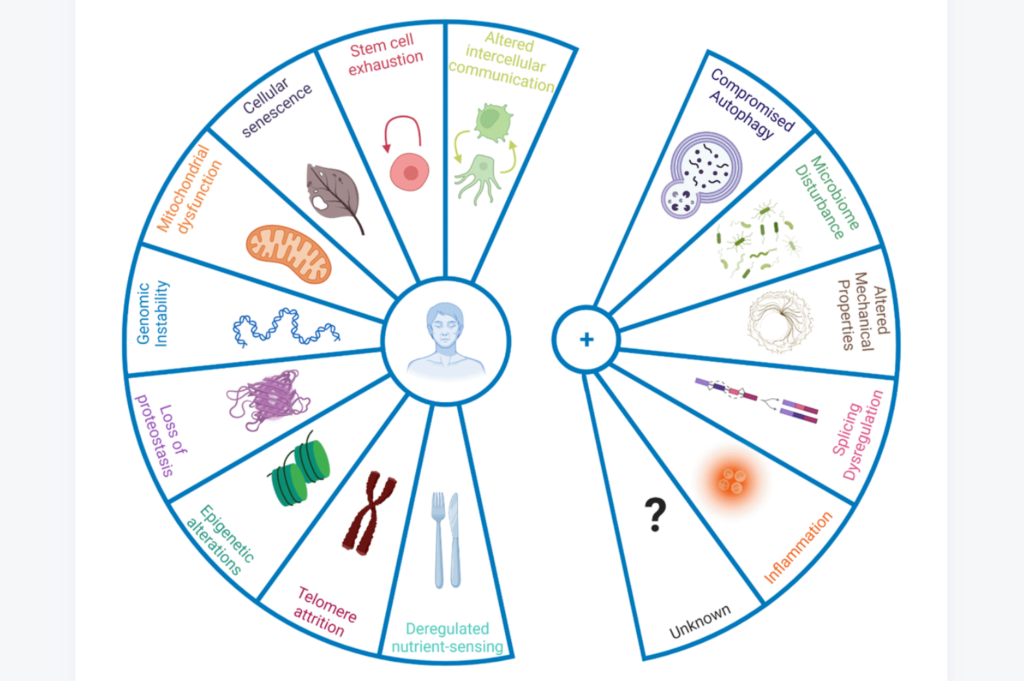
The 2022 “New Hallmarks of Ageing” Research Symposium

Figure 1. New hallmarks of ageing.

Humans battle a number of biological processes with age that lead to the gradual deterioration of cells and tissues. Frailty, disability, disease, and death are all costly fates of aging. Researchers who study aging aim to change this fate, however, the mechanisms of aging are still all but fully understood.

In 2013, López-Otín and colleagues attempted to identify these biological processes and proposed the original nine hallmarks of aging: genomic instability, telomere attrition, epigenetic alterations, mitochondrial dysfunction, loss of proteostasis, deregulated nutrient-sensing, cellular senescence, stem cell exhaustion, and altered intercellular communication. These hallmarks of aging have helped to provide a framework for thought about the causes and consequences of aging, as well as potential targets for therapeutic interventions. Now, nine years later, the hallmarks of aging have been updated in light of recent discoveries.

“In the nearly past 10 years, our in-depth exploration on ageing research has enabled us to formulate new hallmarks of ageing which are compromised autophagy, microbiome disturbance, altered mechanical properties, splicing dysregulation, and inflammation, among other emerging ones.”

The “New Hallmarks of Ageing” 2022 Symposium

This update was presented on March 22, 2022, at the “New Hallmarks of Ageing” research symposium in Copenhagen, Denmark. On August 29, 2022, a review paper summarizing the symposium was published in Aging (Aging-US), entitled, “New hallmarks of ageing: a 2022 Copenhagen ageing meeting summary.” The authors of this review are researchers Tomas Schmauck-Medina, Adrian Molière, Sofie Lautrup, Jianying Zhang, Stefan Chlopicki, Helena Borland Madsen, Shuqin Cao, Casper Soendenbroe, Els Mansell, Mark Bitsch Vestergaard, Zhiquan Li, Yosef Shiloh, Patricia L. Opresko, Jean-Marc Egly, Thomas Kirkwood, Eric Verdin, Vilhelm A. Bohr, Lynne S. Cox, Tinna Stevnsner, Lene Juel Rasmussen, and Evandro F. Fang from University of Oslo, Akershus University Hospital, Jagiellonian University, University of Copenhagen, Copenhagen University Hospital Rigshospitalet, Bispebjerg and Frederiksberg, Lund University, University College London, Tel Aviv University, University of Pittsburgh, University of Strasbourg, National Taiwan University, Newcastle University, Buck Institute for Research on Aging, National Institute on Aging, University of Oxford, Aarhus University, The Norwegian Centre on Healthy Ageing (NO-Age), and UPMC Hillman Cancer Center.

Among the keynote speakers who presented at this symposium was Vilhelm A. Bohr, M.D., Ph.D., Chief of the Laboratory of Molecular Gerontology at The National Institute on Aging and a distinguished member of the Aging Editorial Board. Dr. Bohr presented new data on the DNA damage response enzyme poly ADP-ribose polymerase 1 (PARP1)-related pathways. He suggested that PARP1 might be present and functional in mitochondria. Dr. Bohr also presented on the short-term use of NAD+ supplementation in age-related hearing loss.

“Here, Professor Bohr’s group showed that the treatment of mice with NR [nicotinamide riboside] was capable of restoring NAD+ in the cochlea of aged mice to the levels found in young mice. Even more strikingly, NR treatment limited the progression of hearing loss in ageing mice while stopping the progression of hearing loss in old mice.”

The Meeting Report

The authors’ review summarized all the work presented in this symposium, consisting of some of the latest findings in the field and contextualized by the updated hallmarks of aging. Their summaries of presentations were grouped by theme, including theories of aging and cellular senescence, new insights into telomeres and cellular senescence, inflammation, NAD+ and aging, mitochondrial dysfunction, premature aging and DNA repair, and cardiovascular, cerebrovascular and muscular pathologies of aging.

“The presented data showcased novel research at the forefront of the field, with a focus on a possible increase in healthspan and the amelioration of age-related diseases. Here, both the possible clearance or delay of senescent cells as well as possible interventions in the NAD+ system were discussed. While both of these approaches are promising, they are not without limitations.”

A panel discussion took place at the end of the symposium which was moderated by Eric Verdin, M.D., President and CEO of the Buck Institute for Research on Aging and also a distinguished member of the Aging Editorial Board. In sum, the symposium hosted several established researchers and young scientists who presented and discussed the latest findings in age-related research. They discussed new aging research in concert with how it connects to the old and new hallmarks of aging.

“Amalgamation of the ‘old’ and ‘new’ hallmarks of ageing may provide a more comprehensive explanation of ageing and age-related diseases, shedding light on interventional and therapeutic studies to achieve healthy, happy, and productive lives in the elderly.”

Conclusion

The goal of the “New Hallmarks of Ageing” symposium was to provide a platform for researchers to discuss the latest findings in aging research and to update the hallmarks of aging in light of new discoveries. While many promising discoveries have been made in the last decade, the authors cautioned that more work is needed to better understand aging and how these findings can be translated into therapies that improve human healthspan and quality of life. Discussions and research shared at this symposium have the potential to lead to new insights and breakthroughs in the field of aging research.

“At this point, tremendous progress has occurred, but a unified theory of ageing that can fully explain the process is still missing, and many open questions remain, both on a cellular and organismal level. Whether it is possible to target the ageing process at its core, or whether a combination of approaches is needed to target the aspects encompassing ageing, remains to be solved in the future.”

Click here to read the full review paper published by Aging.

AGING (AGING-US) VIDEOS: YouTube | LabTube | Aging-US.com

Aging is an open-access journal that publishes research papers bi-monthly in all fields of aging research. These papers are available at no cost to readers on Aging-us.com. Open-access journals have the power to benefit humanity from the inside out by rapidly disseminating information that may be freely shared with researchers, colleagues, family, and friends around the world.

For media inquiries, please contact [email protected]

  • Follow Us